
ORMN News
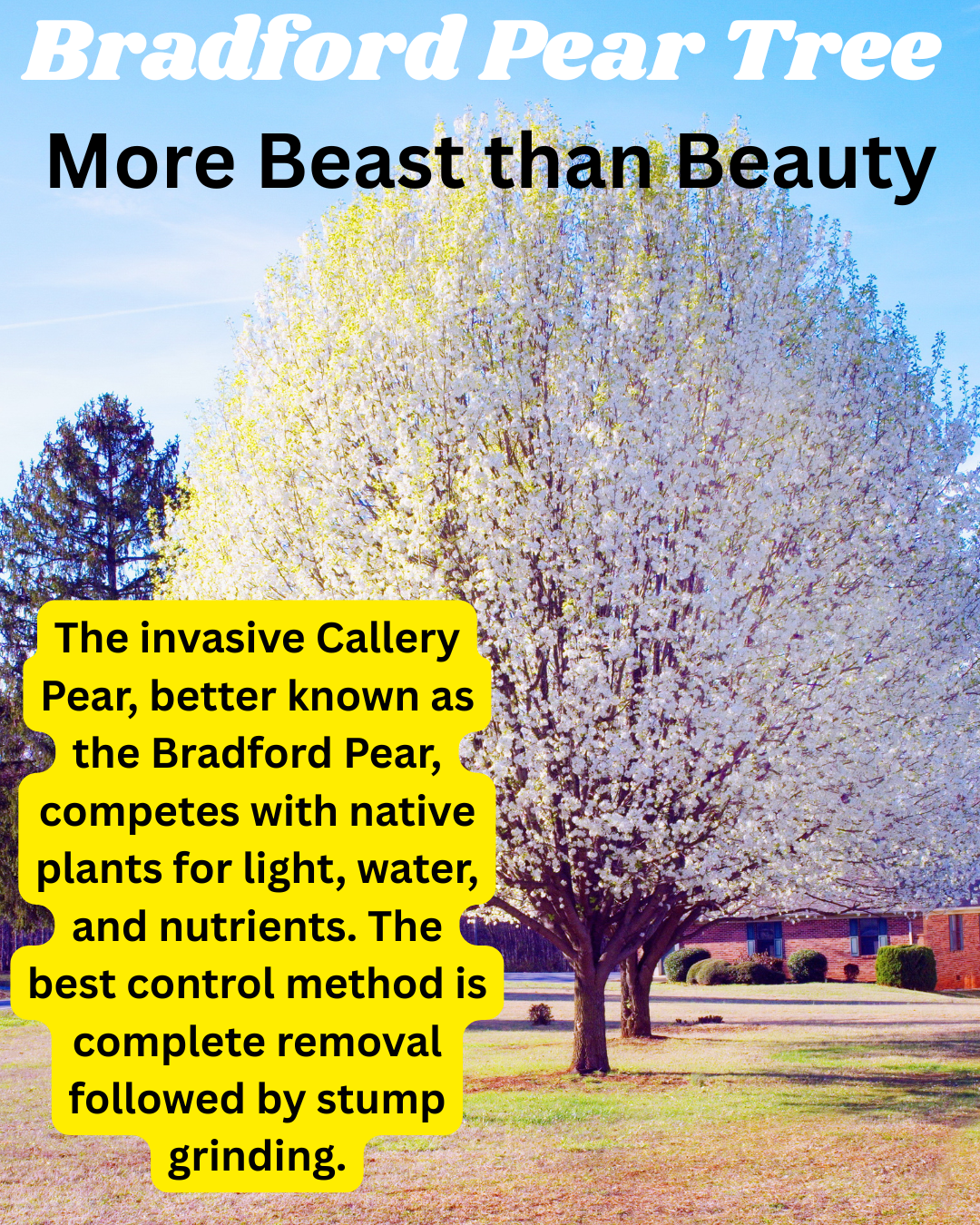
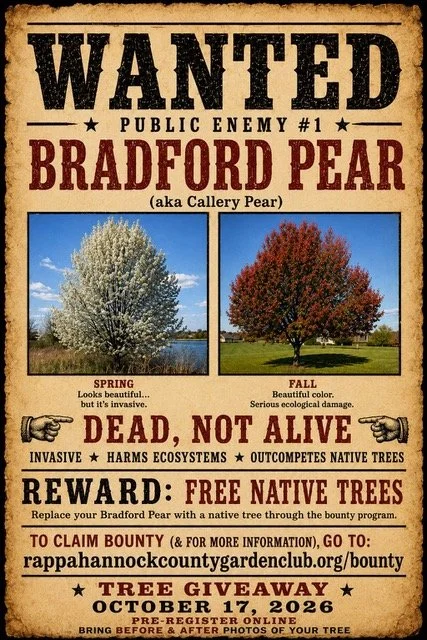
On October 17, the Old Rag Master Naturalists will co sponsor a Bradford Pear Exchange Program in Rappahannock County
Commentary: Wanted — Bradford pear trees, dead not alive
By: Ann DiFiore - Old Rag Master Naturalist
How often have you driven through a neighborhood or along a highway in spring and remarked on all the snowy-white blossoming trees? It may surprise you to learn that those pretty blossoms belong to a highly invasive tree, commonly known as Bradford pear. . . .
Bird Walk at Cedar Mountain Battlefield
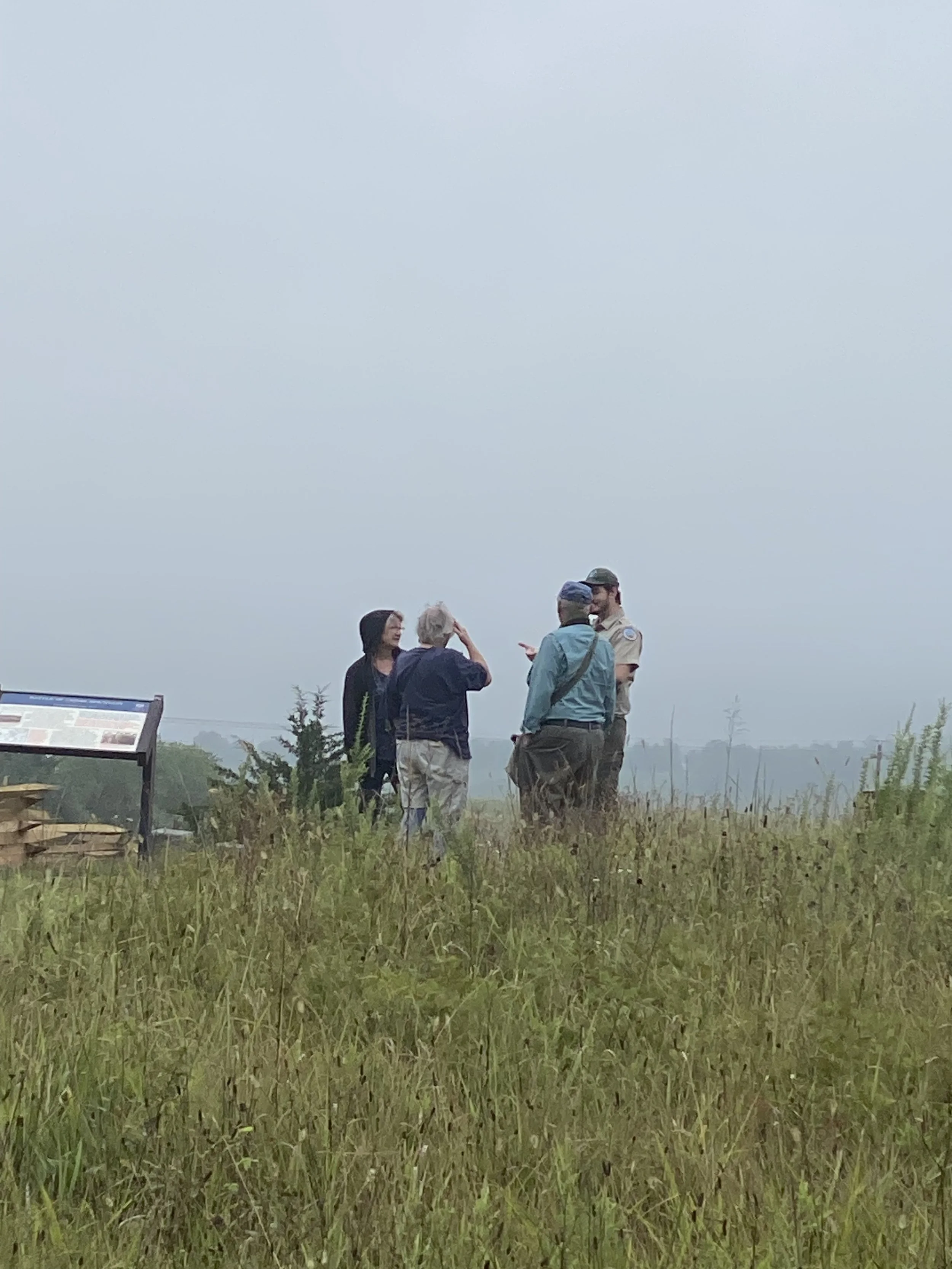
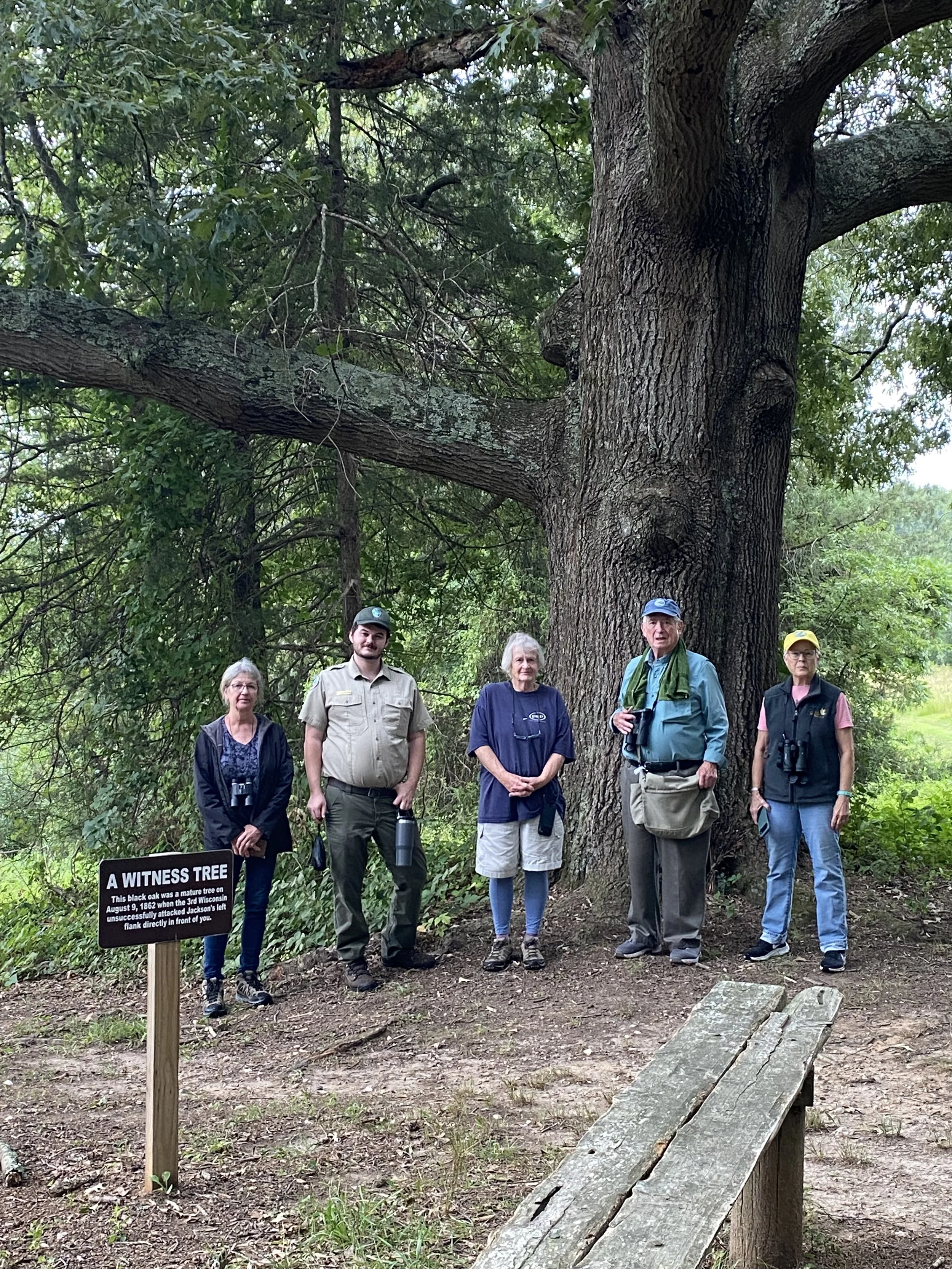
On July 25th, 2026 a dedicated group of birders lead by Old Rag Master Naturalists braved the mist and cloudy skies for a wonderful morning bird walk at Cedar Mountain Battlefield.
Despite the damp weather, they spotted Eastern Bluebirds and a pair of Black Vultures soaring overhead, and identified 17 additional bird species by sound. Sometimes the birds are easier to hear than to see!
A special thank you to Interpretive Ranger George Webb-Watkins, who joined us on the walk and shared the rich history of Cedar Mountain Battlefield. His insights into the site's important role in the Civil War made the experience even more meaningful.
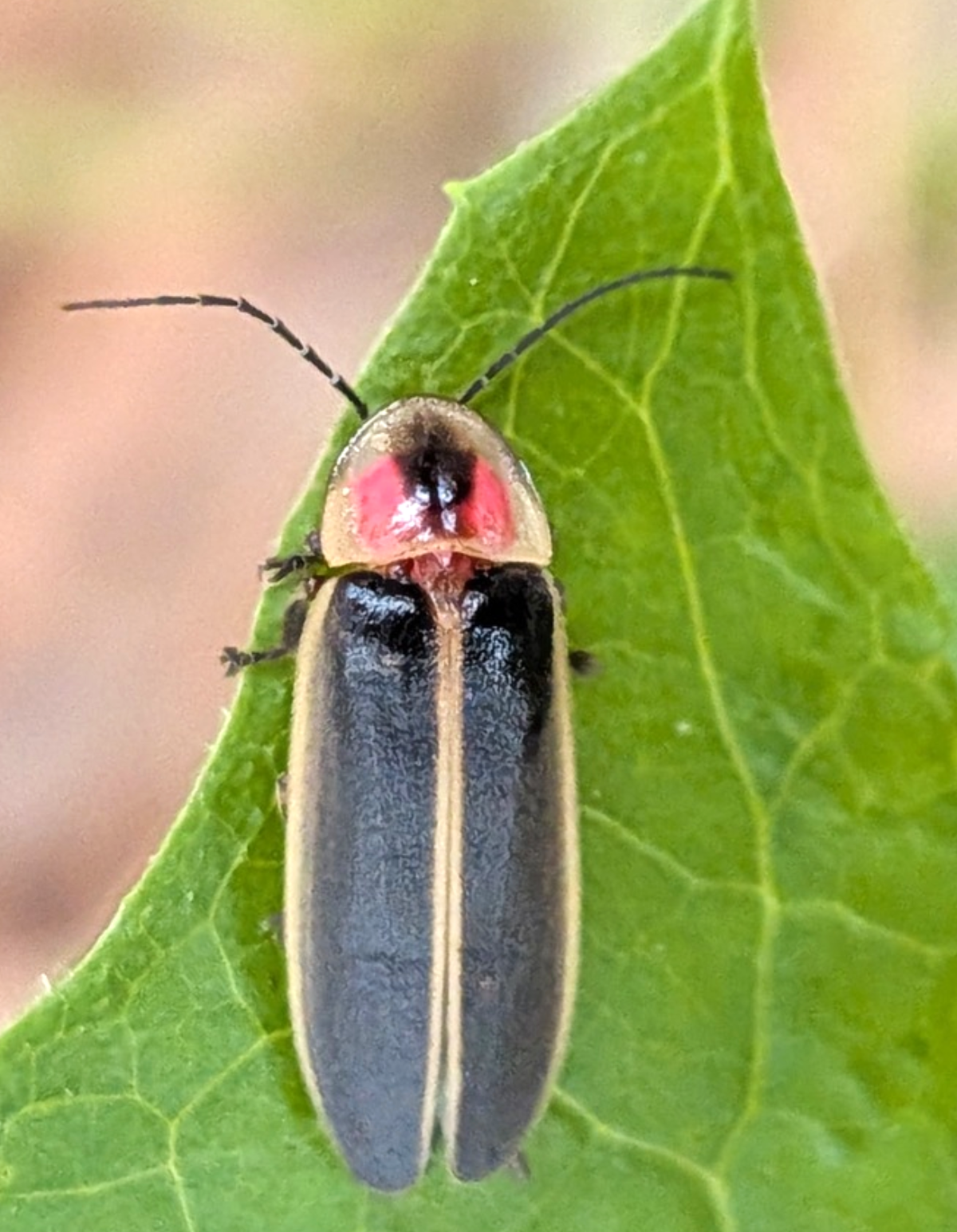
Firefly Sanctuaries: A Growing Movement
Nancy Sopher, ORMN Member
Like BBQs, flip-flops or a cool swim on a hot day, fireflies are a sign of summer. One of our most beloved insects, no species evokes such warm feelings of nostalgia as fireflies. Many of us have cherished memories of chasing and catching these enchanting critters on warm summer nights, but there are signs the next generation of kids may not grow up with the same firefly memories. . . .
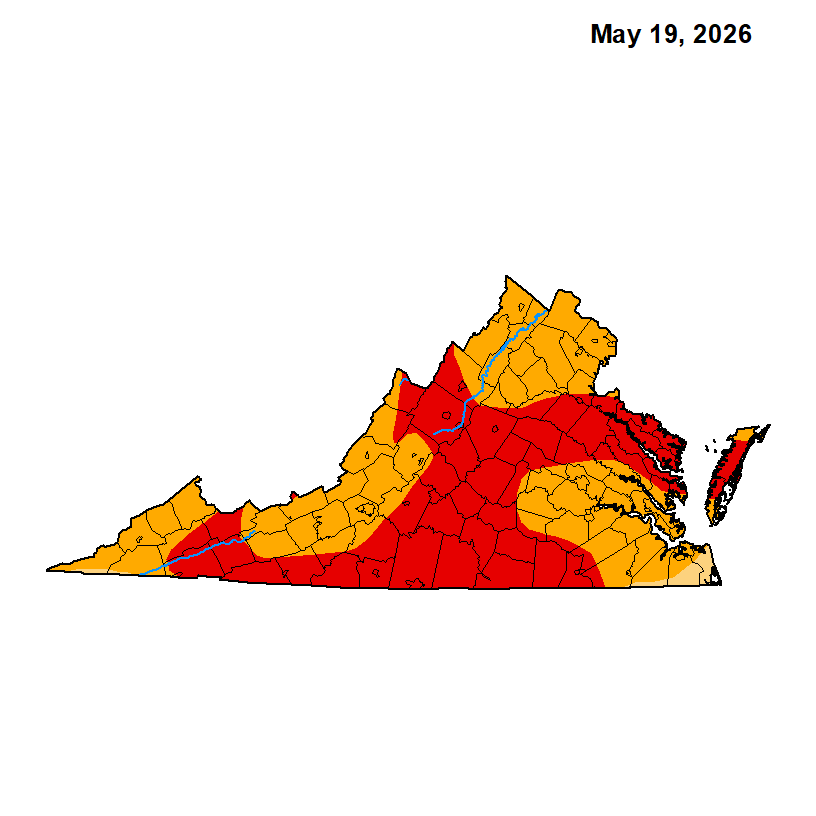
A dry spring – Challenges faced by animals of all kinds
Charlene Uhl
Here in Virginia, we are experiencing a “dry spring”. As of May 3, 2026, Central Virginia is officially under a “Drought Warning” advisory issued by the Virginia Department of Environmental Quality. The current situation is significant, where conditions have gotten worse due to the lack of rainfall and higher temperatures. . . .
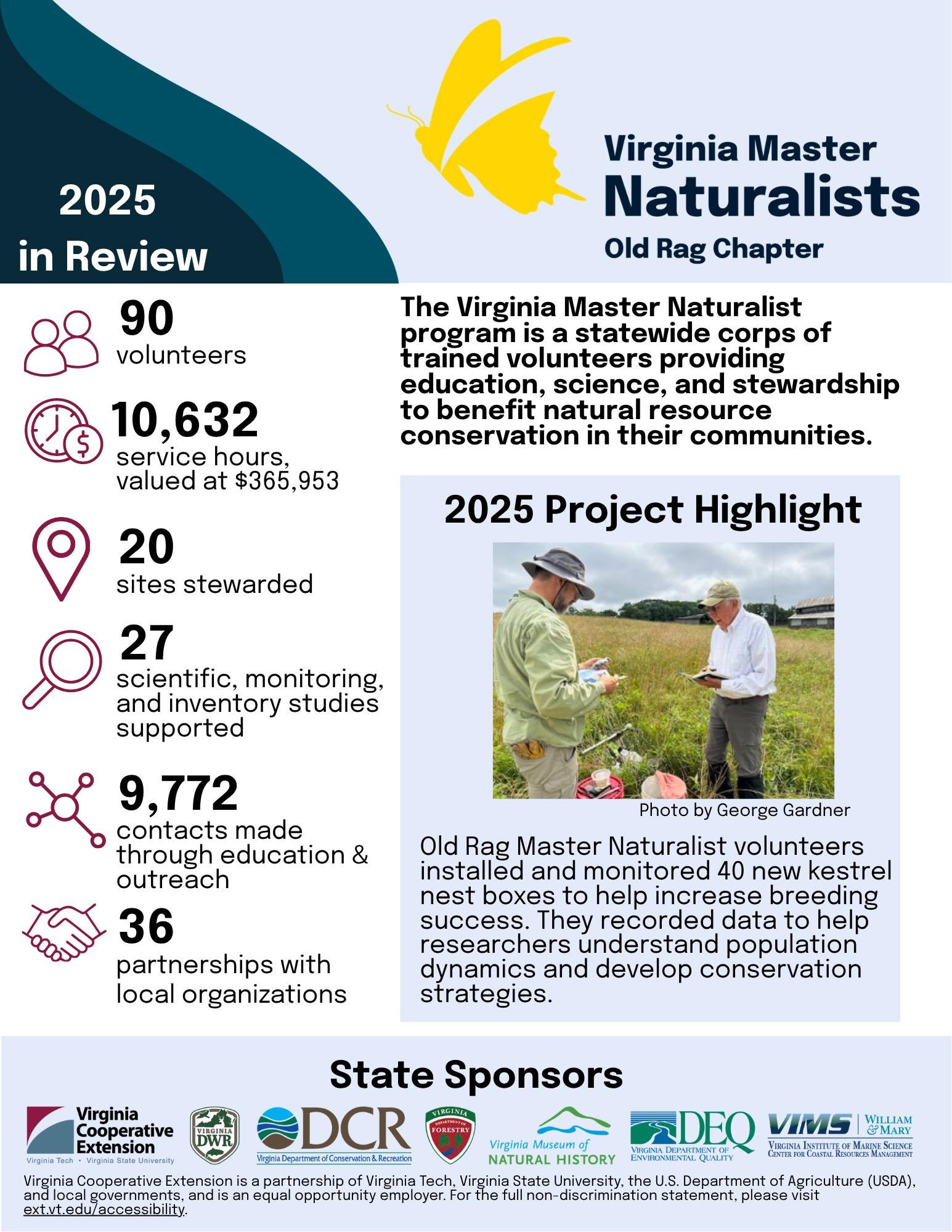
ORMN 2025 Year in Review
Virginia Master Naturalists – Old Rag Chapter: 2025 Year in Review!
The Virginia Master Naturalist program is a statewide corps of trained volunteers who provide education, citizen science, and stewardship to support natural resource conservation in their communities.
Here in the Piedmont, Old Rag Master Naturalists equip volunteers with strong foundational training so they can make a meaningful impact across Culpeper, Fauquier, Greene, Madison, Orange, and Rappahannock counties.
From trail maintenance and habitat restoration to public education, wildlife monitoring, and research, ORMN members are working year-round to protect and enrich the natural resources we all treasure.
2025 Project Highlight: American Kestrel Nest Box Monitoring
In 2025, 23 ORMN volunteers installed 40 new kestrel nest boxes on private lands, bringing the total to 91 nest boxes monitored weekly across our six-county area during the breeding season.
These dedicated volunteers logged 1,217 hours on this project and submitted 3,183 data entries to NestWatch. The nest boxes had an overall occupancy rate of 49%, and the project directly contributed to 92 kestrel nestlings fledging into the wild. Now that’s something to chirp about.
ORMN 2025 Volunteer Impact:
90 volunteers
10,632 service hours
Volunteer service valued at $365,953
20 sites stewarded
27 scientific, monitoring, and inventory studies supported
9,772 education and outreach contacts made
36 partnerships with local organizations
We are grateful for every volunteer, partner, landowner, and community member who helped make 2025 such an impactful year for conservation in our region.
Here’s to another year of learning, serving, and protecting the natural world — one project, one species, and one community connection at a time.
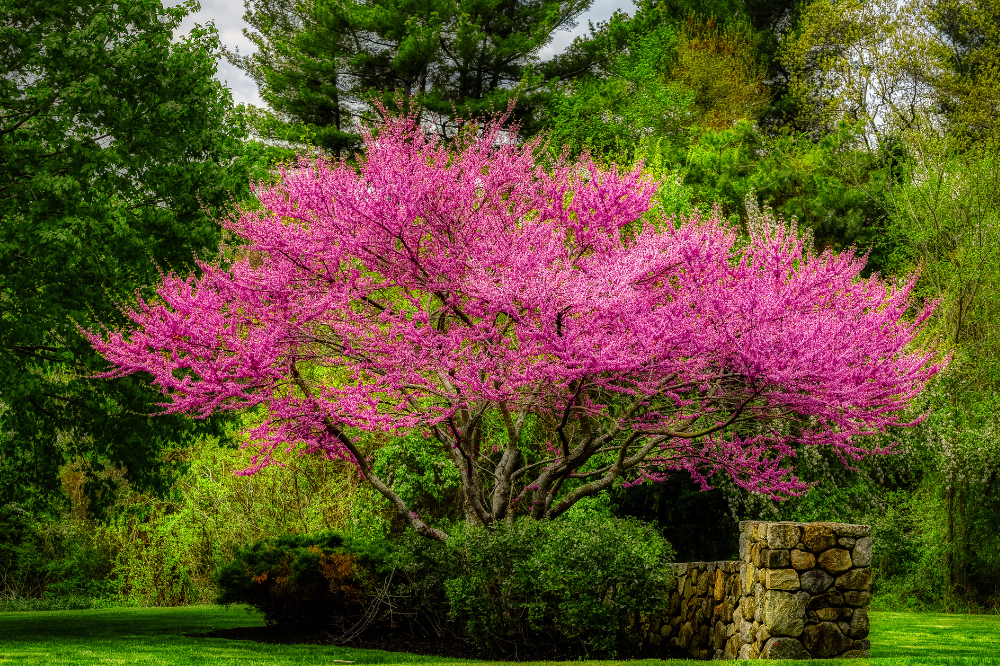
PJR file photo.
The Food of Spring
Charlene Uhl
Spring is a critical bridge season for wildlife. After a long winter, animals need high-energy food sources to fuel migration and nesting as well as dense cover to protect their young…
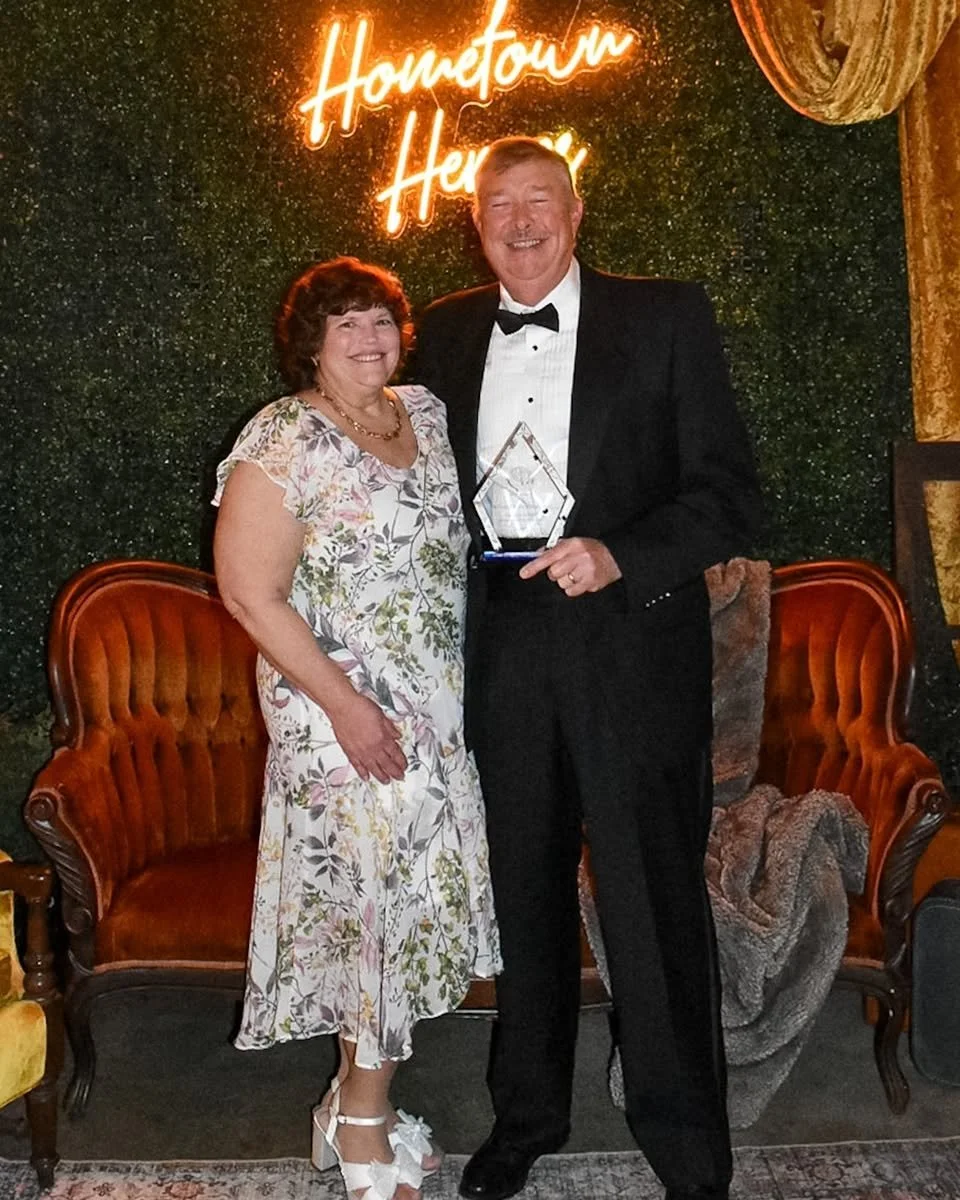
ORMN Wins Hometown Heroes Environmental Stewardship Award
Old Rag Master Naturalists (ORMN) capped a landmark year in 2024 with growing membership, expanded community programs, and meaningful conservation results across Virginia's Piedmont region.
The organization deploys nearly 100 trained volunteers across six counties in support of habitat restoration, wildlife monitoring, and public education. In 2024, members contributed thousands of bird observations to Cornell Lab citizen-science programs, hosted guided bird walks, and expanded youth and inclusive education outreach.
Among the year's highlights, ORMN partnered with the Virginia Grasslands Bird Initiative on a kestrel nest box program, helping fledge 92 of the small falcons across the region by 2025.
The organization's achievements earned special recognition this year. Pictured above, ORMN President Alan Edmunds and his wife Judy accept the award on behalf of the organization and its dedicated volunteers.
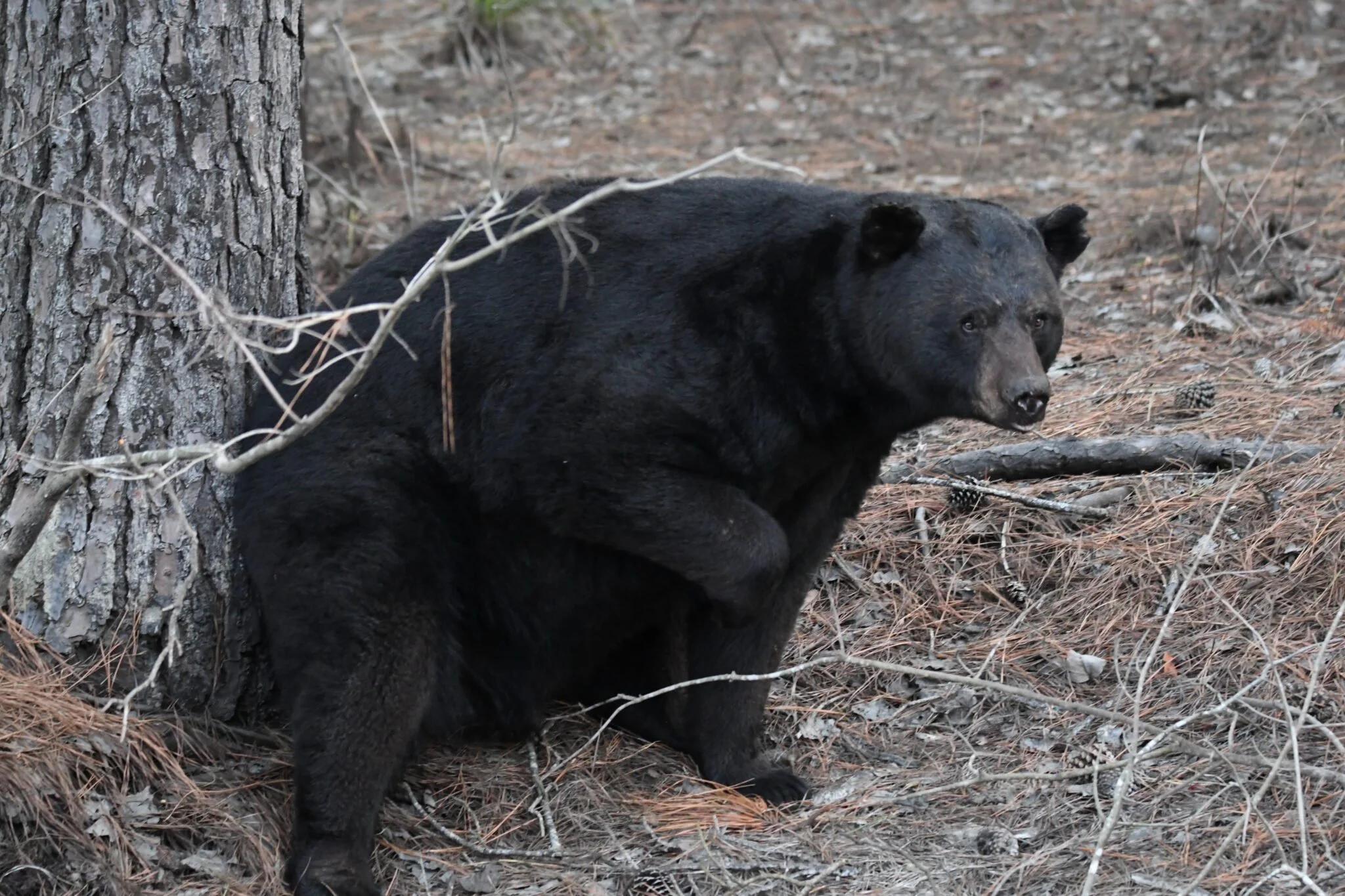
Photo Credit : Scott Jenkins (ORMN Member)
The March of Spring
Charlene Uhl
“March is a major transition month in Virginia. As temperatures consistently rise above freezing and spring rains begin, several species emerge from their winter “sleep.”
Depending on the animal, it might be true hibernation (bears, groundhogs, and chipmunks), brumation (reptiles) or torpor (bats). . . .
How we can help wildlife in winter
Charlene Uhl
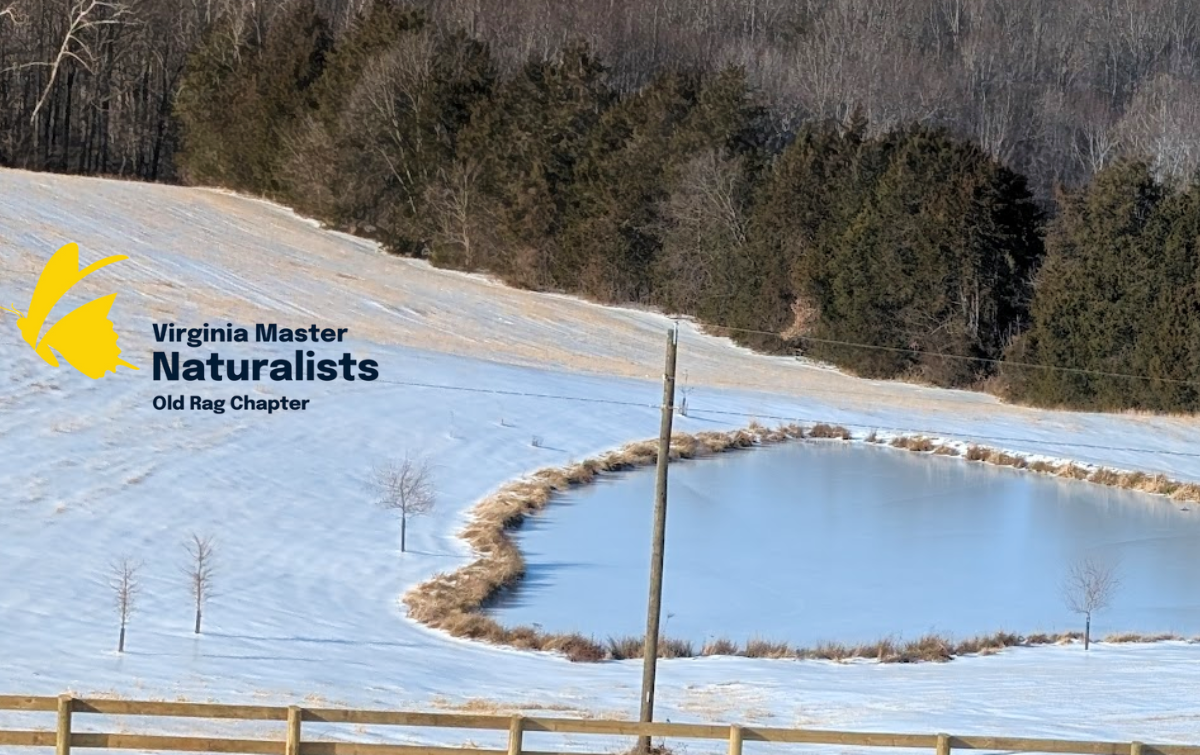
“Winter weather in Virginia is challenging to wildlife. And we can help animals during the winter in three major ways: food, water and shelter.”
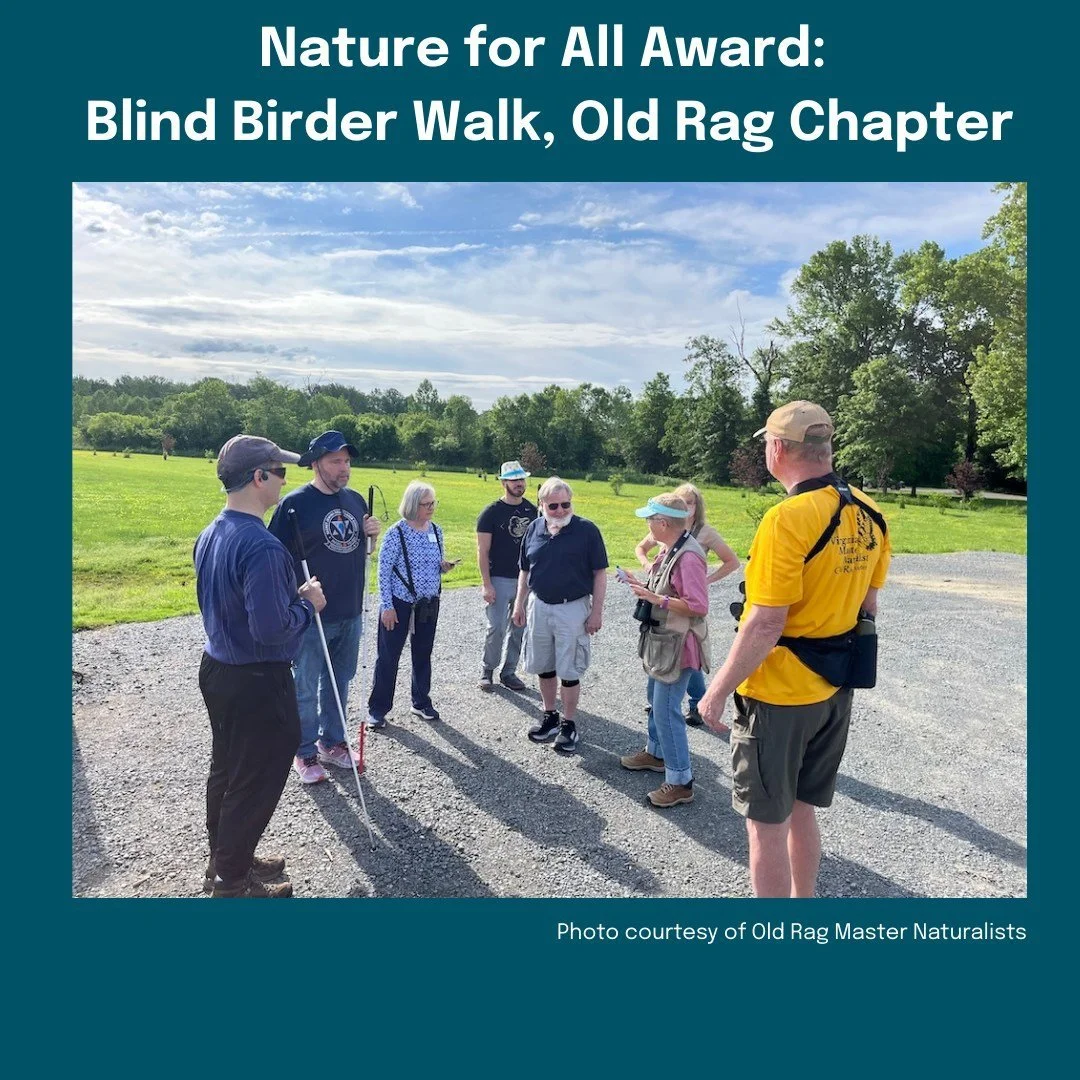
Old Rag Master Naturalists - Winner of the “Nature for All Award”
“This award recognizes efforts by VMN chapters to reduce barriers for spending time in nature, facilitate learning experiences accessible to all, and foster an inclusive and welcoming atmosphere. Over the last few years Old Rag Master Naturalists (ORMN) has actively worked to make their activities and events accessible to people who have physical challenges, including mobility and visual disabilities. All their approved activities identify the level of accessibility that each activity has, to increase the accessibility of as many projects as possible. The chapter participated in the first nationwide Blind Birder Bird-a-Thon on May 18th. This walk was sponsored by Birdability, a non-profit organization dedicated to making the birding community and the outdoors welcoming, inclusive, safe, and accessible for everybody.
Old Rag Master Naturalist volunteers collaborated with both Birdability and the Federation for the Blind of Virginia to get training for their members on the most respectful ways to offer assistance to blind participants on a bird walk, to advertise the opportunity to their members, and to choose a location with good accessibility features and good bird watching potential. With a one-to-one ratio of VMN volunteers to guests, they were able to guide participants as needed and get to know each other. They heard 17 bird species and used the Merlin app.”
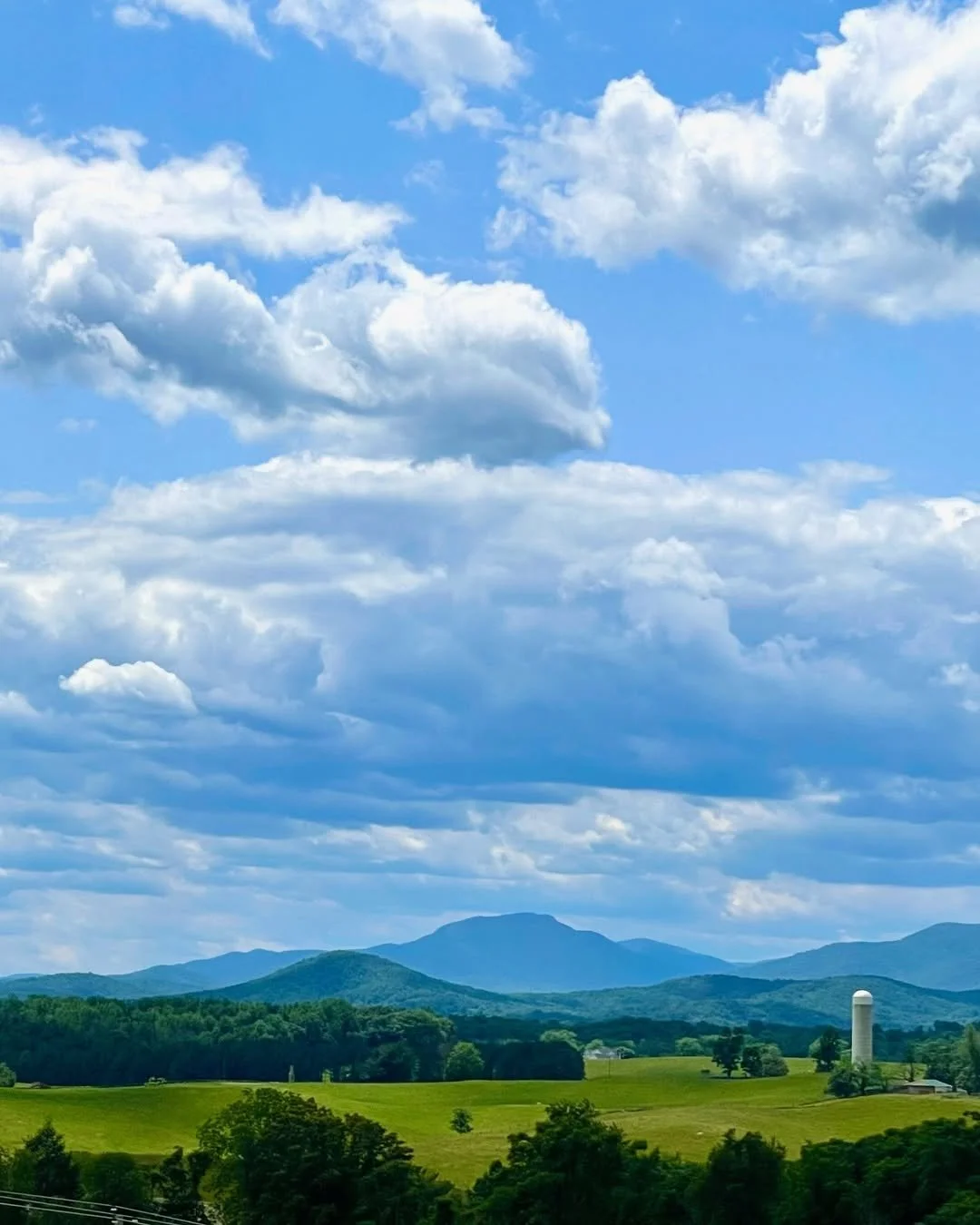
Photo Credit : Jennifer Tepper
Rappahannock League for Environmental Protection
“is pleased to share that Scenic Virginia has added Old Rag Mountain to its Treasured Views Register - a wonderful recognition of one of the region's most beloved landmarks.
A special thank you to RLEP Board Member Mike Wenger, whose application made this recognition possible. The submission featured striking photographs of the mountain taken by both Mike and Luke Christopher, photographer for Rappahannock News (featured image here is another of Old Rag from near the intersection of Routes 211 and 522).
Scenic Virginia states, "Old Rag Mountain is one of Virginia's most iconic natural landmarks, famous not only as a beloved hike, but for something truly rare: its beauty is experienced as much from the valley below as from the summit above." We in Rappahannock certainly know this to be true!”
Artwork : Trish Crowe
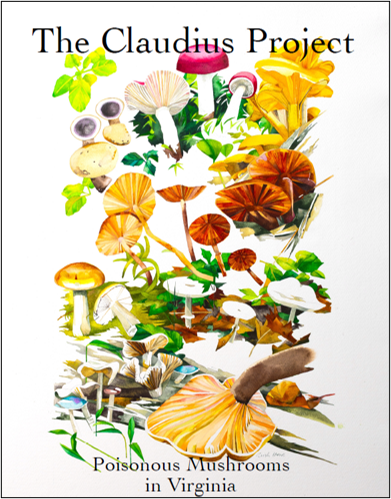
To help keep Virginians safe, a free reference guide to poisonous mushrooms found in Virginia is now available as a downloadable book.
The book is a collaboration between the Virginia Master Naturalists – a statewide volunteer corps providing education, outreach and service dedicated to the beneficial management of natural resources and natural areas within their communities – UVA Health’s Blue Ridge Poison Center and the University of Virginia School of Medicine’s Division of Medical Toxicology.
How animals survive winter
Charlene Uhl
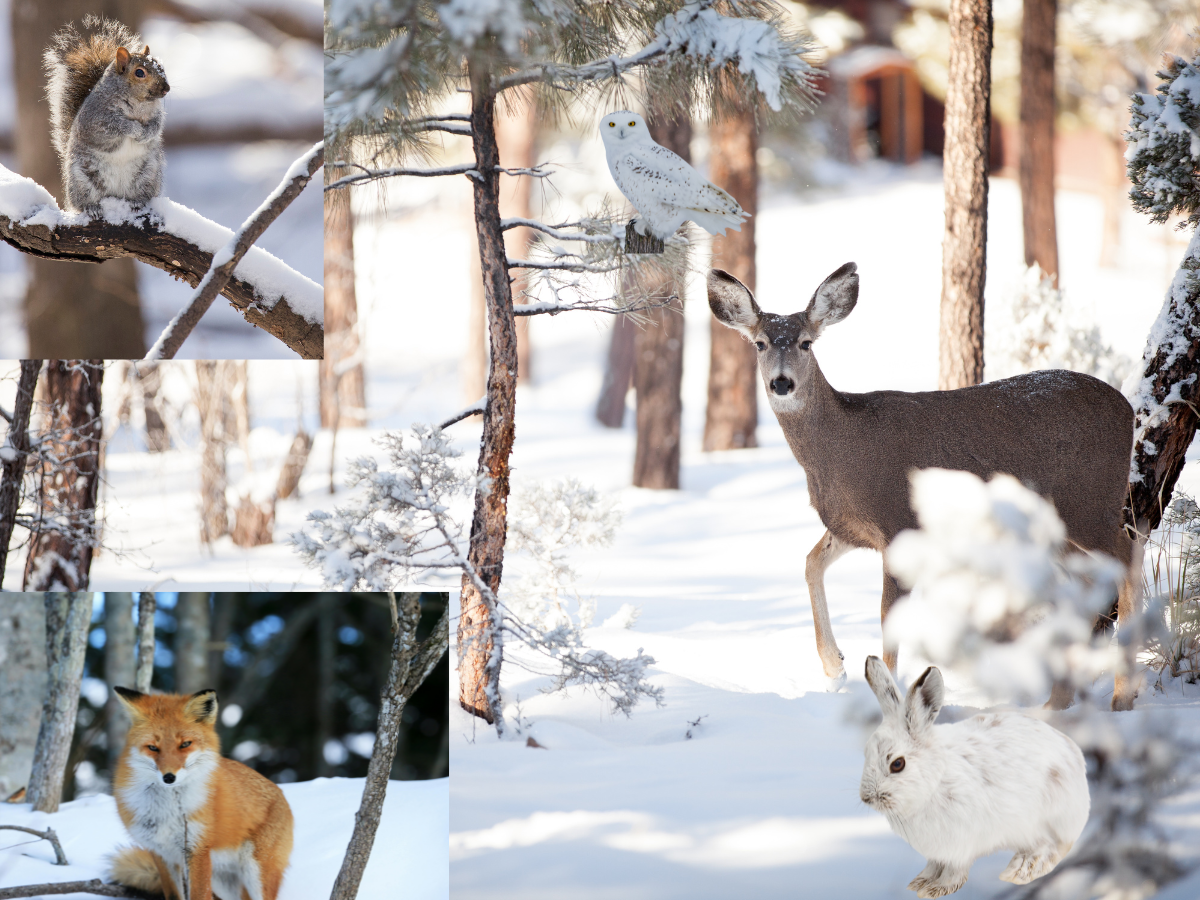
“Winter poses a challenge to many animals in central Virginia. Temperatures typically fluctuate from 28 to 50 degrees over a 24-hour period. This means that it takes more energy to stay warm. Food that is available during the other months is often not available.” ….

High School Scholarship
The Old Rag Master Naturalist (ORMN) Chapter sponsors annual academic scholarships to support high school seniors who plan to pursue college degrees in wildlife management or science, natural resources, agriculture, forestry, conservation, environmental studies, or related fields.
Virginia White-Tailed Deer – Vehicular collisions, CWD, and Property damage
Charlene Uhl
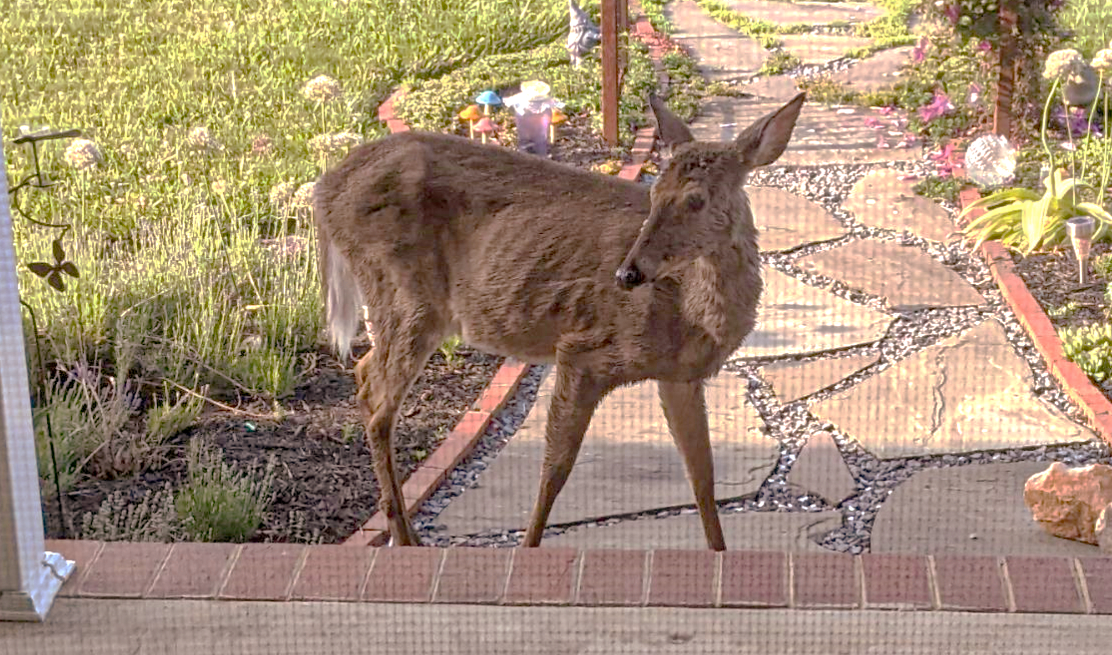
“Virginia is home to approximately 110 to 115 different mammal species which includes both land and marine mammals. Of the land mammals, they can range from a 700-pound Elk to the Pygmy Shrew that weighs 3-4 grams (the weight of a dime)” …
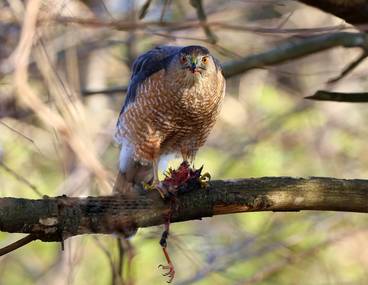
Hawks – The World’s Most Efficient Predators
Charlene Uhl
“People have been fascinated by hawks throughout history. Hawks have exceptional vision. Their eyesight can be up to eight times sharper than a human’s eyesight. Hawks are incredibly skilled flyers, with some hawk species able to dive at speeds up to 150 mph or more...”